Copilot Deal Accelerator
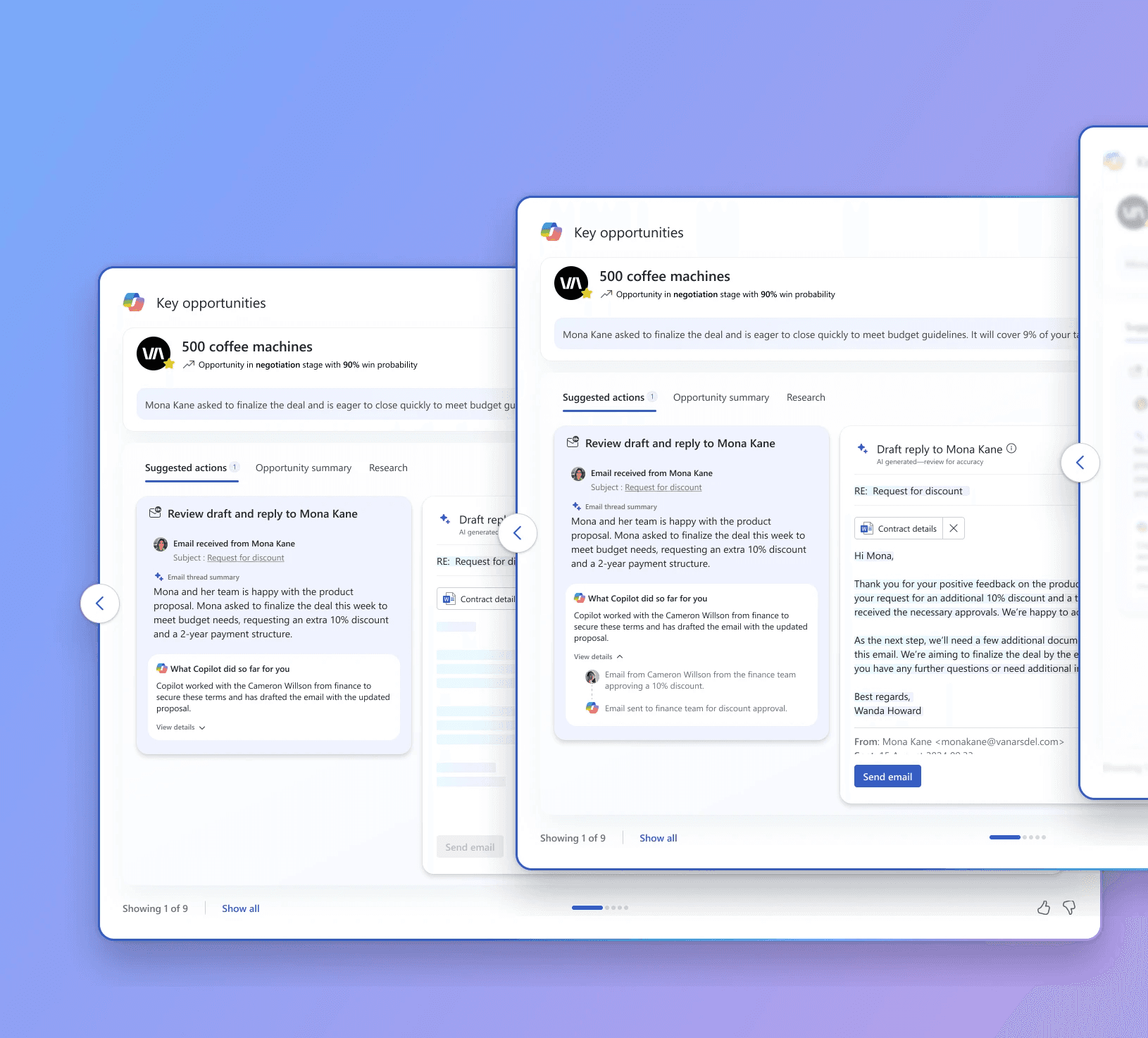
Executive Summary
The Copilot Deal Accelerator is a north star concept created for Dynamics 365 Sales to demonstrate how AI can meaningfully support sellers during the most critical part of the sales cycle, which is the closing and execution phase. Grounded in insights from twenty B2B sellers, the vision addressed a clear problem: sellers spend more time planning, searching for information, and catching up on updates than advancing their opportunities.
Working within a thirty day pre Ignite timeline, I led the design direction by synthesizing research, exploring multiple interaction models, and defining a coherent, action centered experience. The solution introduced a new way of working with Copilot by shifting from reactive support to proactive and contextual guidance through focused views, action cards, and multimodal interactions.
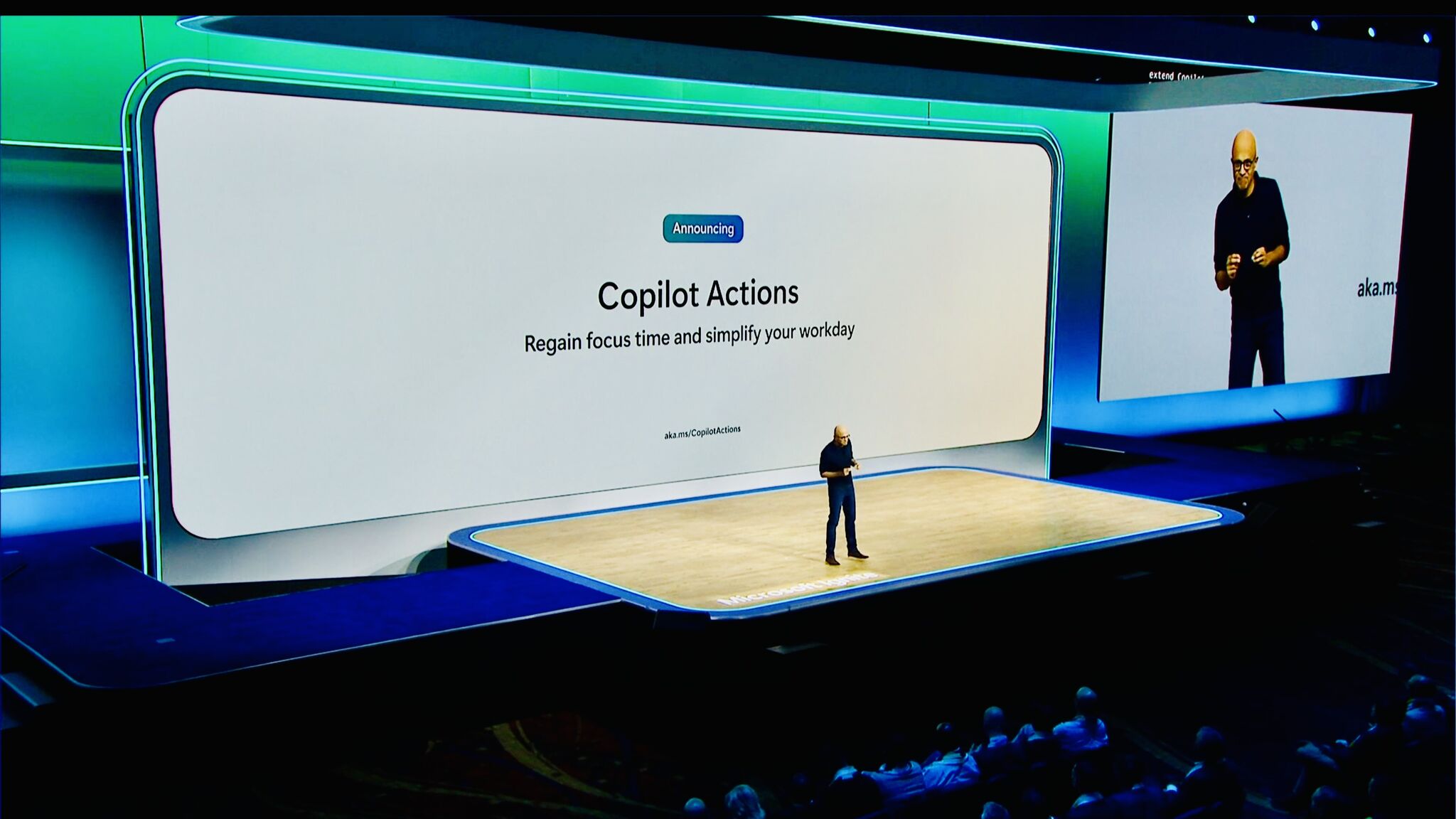
The concept became a foundational reference for future AI driven sales experiences at Microsoft. It helped leadership envision scalable agent powered workflows and directly informed strategic investment decisions. It was showcased during Microsoft Ignite twenty twenty four and received strong recognition for clarity, innovation, and high quality execution within a challenging timeline.
Introduction
In modern enterprise sales, success is rarely determined by a single interaction. Sellers operate within a dense web of customer conversations, internal coordination, administrative tasks, and constantly shifting priorities. As markets become more competitive and sales cycles more complex, even small delays or missed signals can cascade into lost opportunities.
In mid-2024, ahead of Microsoft Ignite, the Dynamics 365 Sales team began exploring how Copilot could meaningfully support sellers during the most critical phase of the sales journey: closing and deal execution. The Copilot Deal Accelerator was envisioned as a forward-looking concept to demonstrate how AI could help sellers focus, prioritize, and act with greater confidence—without increasing cognitive or operational load.
This project later became one of the conceptual foundations that informed Microsoft’s broader thinking around autonomous and agent-driven sales experiences.
What We Were Trying to Solve
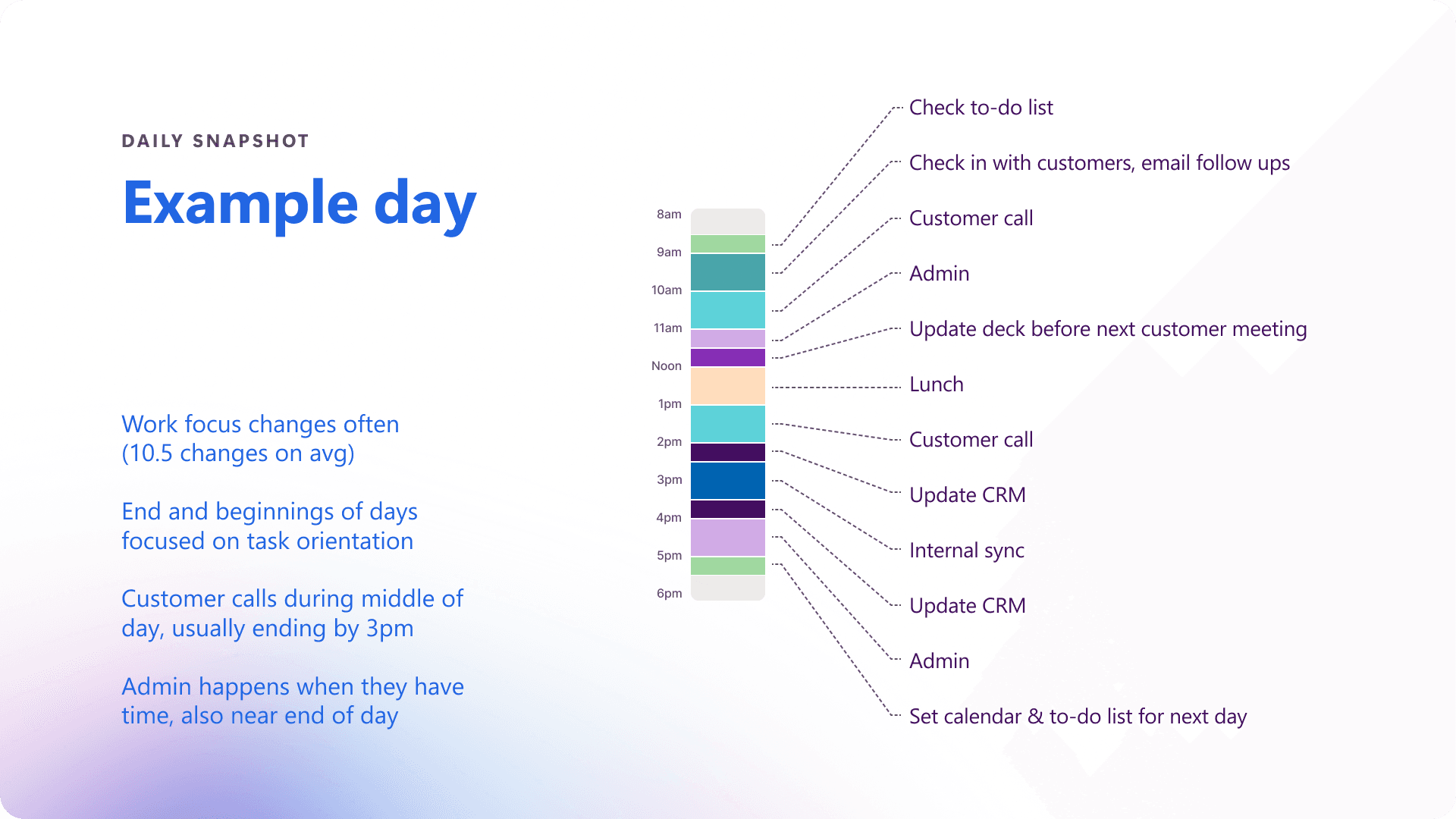
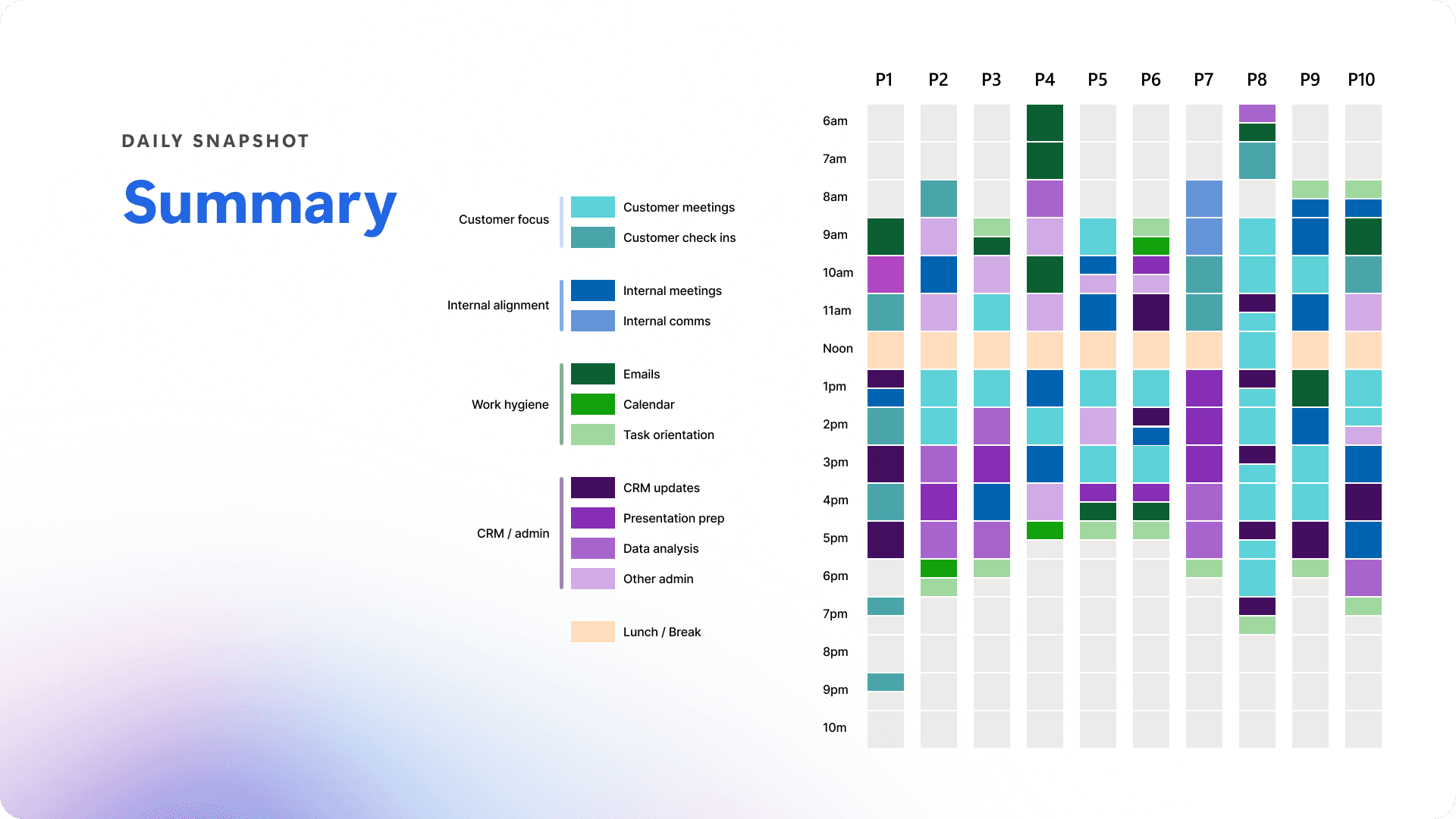
Sellers face highly fragmented workdays. A typical day includes:
Customer calls and follow-ups
Internal meetings and coordination
CRM updates and reporting
Email communication across multiple stakeholders
Tracking deal progress, targets, and gaps
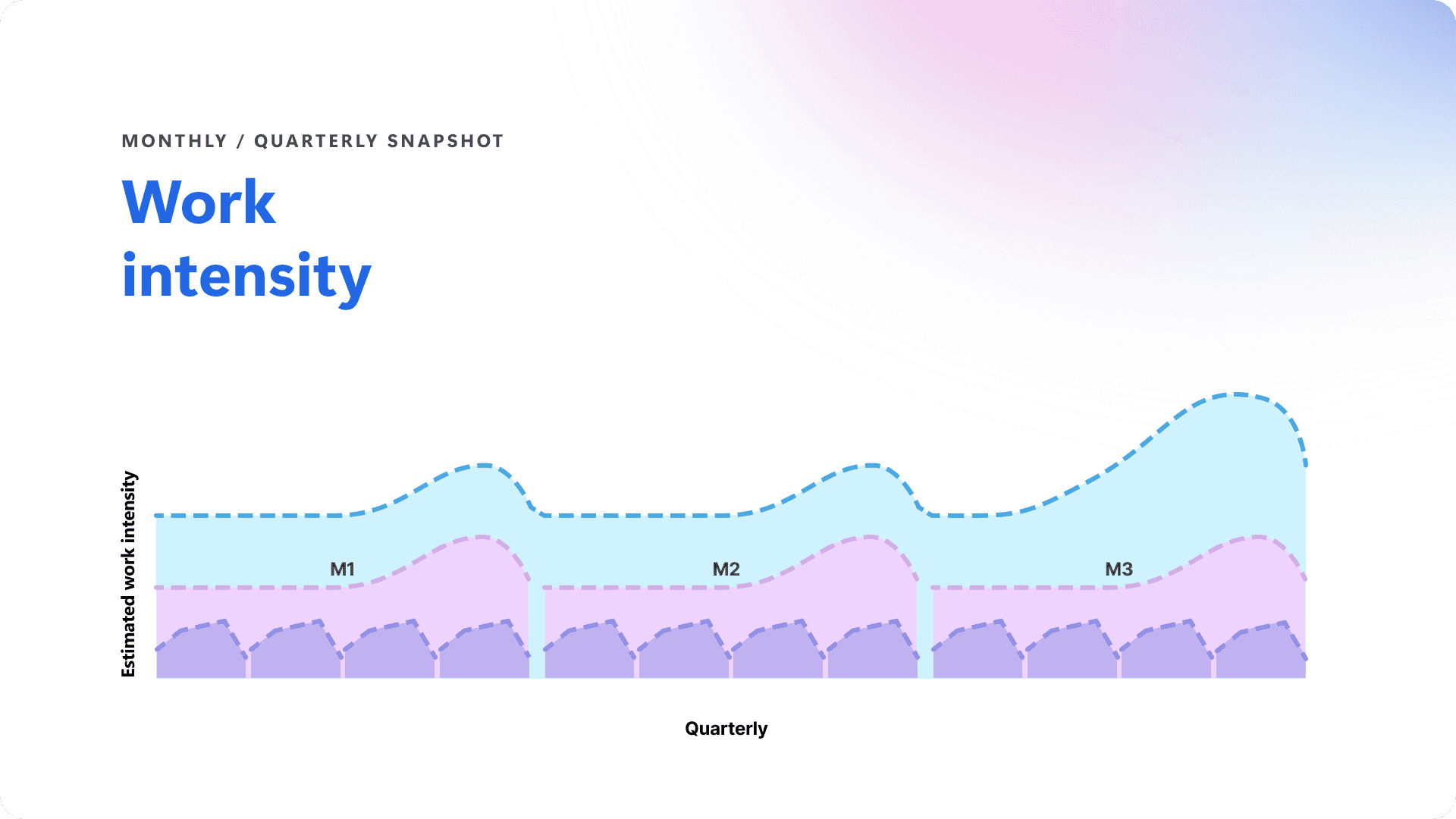
As sellers approach weekly, monthly, or quarterly targets, this fragmentation intensifies. The challenge is not a lack of tools or data, but the difficulty of staying oriented—knowing what matters most right now, across many active opportunities.
Key problems identified:
Sellers spend significant time planning and re-planning rather than executing
Important follow-ups are delayed or missed due to overload
CRM systems capture data well, but provide limited decision guidance
Context switching between tools increases cognitive fatigue
High-value actions are often buried under administrative noise
The goal was to rethink the UX of sales execution so sellers could:
Stay continuously aware of what needs attention
Understand deal progress at a glance
Act quickly, with Copilot handling complexity in the background
Scope of the Work
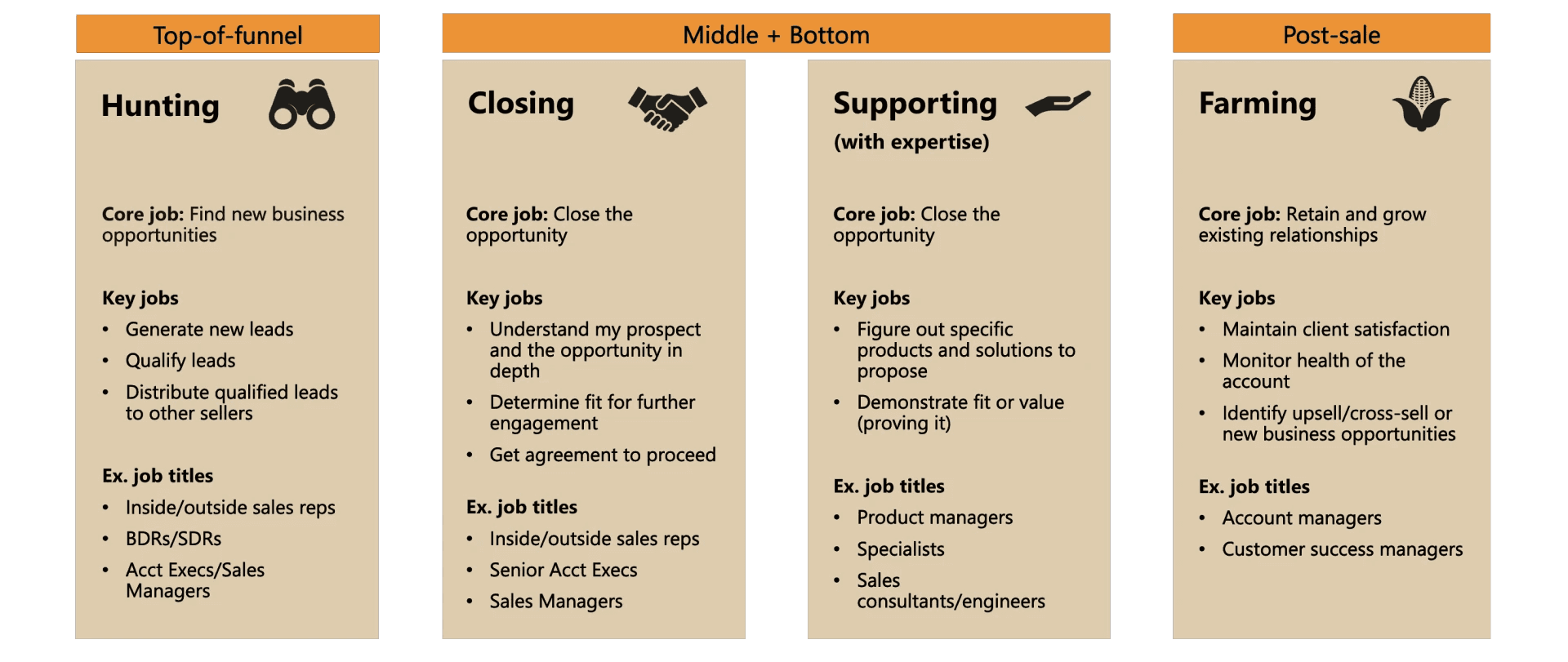
The sales lifecycle can be broadly divided into four stages:
Hunting (top-of-funnel)
Closing
Supporting (with expertise)
Farming (post-sale growth)
This project deliberately focused on the closing and supporting stages, where:
Deal momentum is most fragile
Time pressure is highest
Sellers need the most coordination and insight
The work explored how Copilot could:
Surface the right opportunities at the right time
Recommend and execute next best actions
Help sellers prepare, follow up, and move deals forward
The output was a north-star concept, not an incremental feature—designed to communicate direction, possibility, and design principles rather than a finalized product spec.
My Role
I joined the Microsoft Dynamics 365 Sales team in July 2024, working on this initiative through July and August, leading up to Microsoft Ignite 2024.
My role was to:
Envision the end-to-end Copilot-assisted sales experience
Drive design explorations across multiple interaction models
Synthesize research insights into coherent UX direction
Partner closely with leadership to align vision with feasibility
I worked alongside:
A Senior Executive Leader
A Senior Design Manager
A Senior Designer
While others ensured alignment with current customer needs and technical constraints, I was primarily responsible for systems thinking, experience strategy, and design coherence across the concept.
A major constraint was time: the team had approximately 30 days to arrive at a compelling, demo-ready vision.
Research Insights
To ground the vision, qualitative research was conducted with 20 B2B sellers across two phases.
Participants
Full-time CRM users with over one year of experience
Part of large sales organizations (500+ employees)
Involved in both hunting and closing activities
Across multiple domains (excluding medical and finance)
Key insights
Sellers spend large portions of their week on planning, CRM updates, and follow-ups, often at the cost of direct selling
Many sellers struggle to respond to emails in a timely manner due to volume and context switching
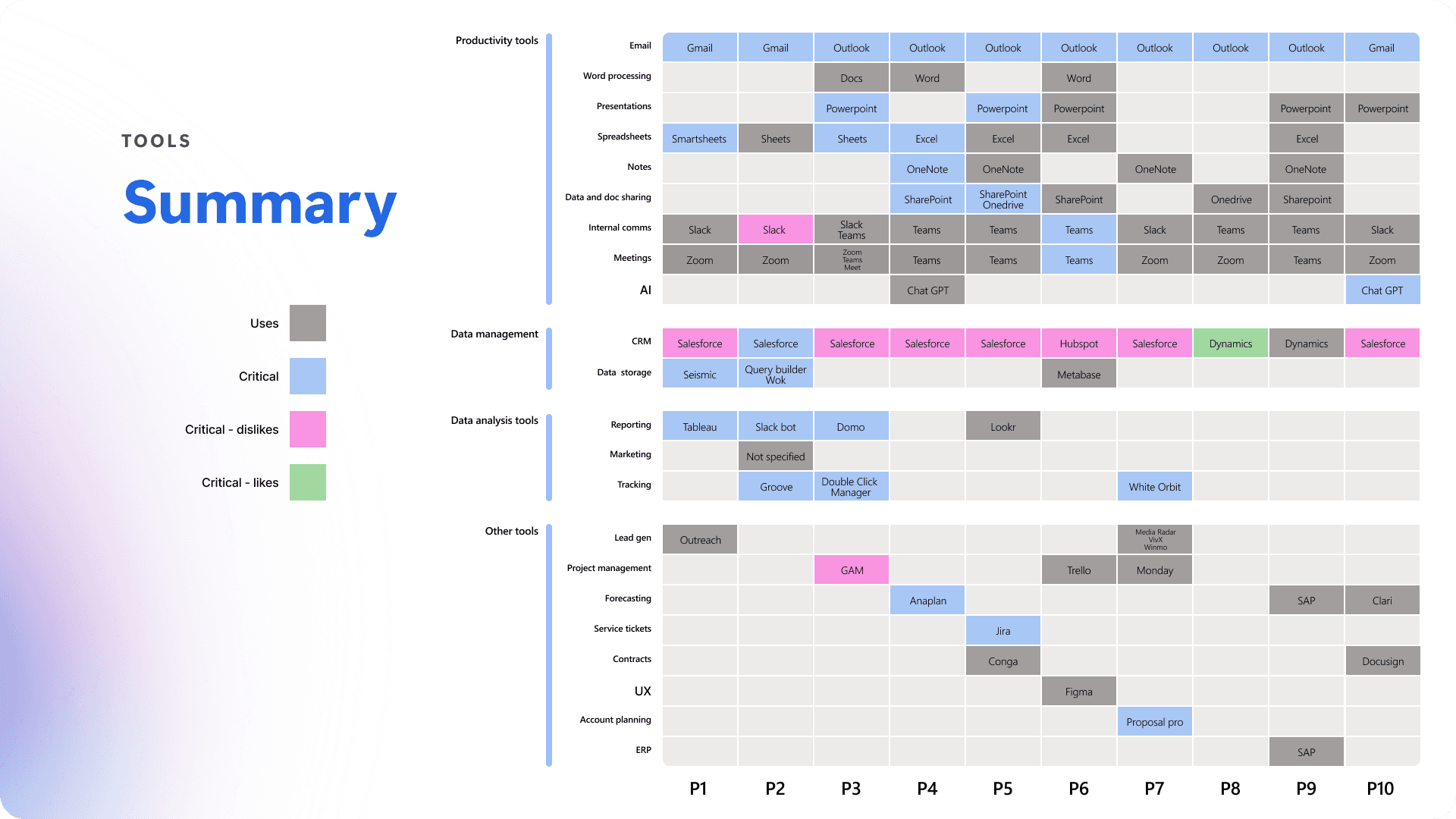
High-performing sellers rely heavily on external tools and personal systems to stay organized
Sellers value clear guidance on which accounts and opportunities to focus on each day
Target tracking and gap analysis are essential, but time-consuming
These insights reinforced a central theme: sellers don’t need more data—they need clarity, prioritization, and momentum.
Design Challenges
Helping sellers prioritize across many active deals
Sellers needed a way to understand which opportunities required immediate attention without manually scanning lists and dashboards.Reducing cognitive load without oversimplifying reality
Sales data is inherently complex. The challenge was to simplify decision-making without hiding critical nuance.Designing for AI assistance without eroding trust
Copilot needed to act proactively, while keeping sellers firmly in control.Supporting different working styles and maturity levels
The experience had to work for both new sellers and experienced power users.Delivering a cohesive vision under extreme time constraints
The concept had to be clear, credible, and demo-ready within weeks.
Design Rationale
The design approach centered on attention management rather than task execution.
Key decisions included:
Action-first experience
Opportunities were treated as evolving states that naturally generate actions, rather than static CRM records.Progressive disclosure
Information was layered so sellers could start with summaries and drill deeper only when needed.Human-in-the-loop AI
Copilot suggested and executed actions, but sellers could always pin, reorder, pause, or override.Multiple modes of interaction
The experience supported visual, conversational, and voice-based interactions to adapt to different contexts.Scalable patterns
Concepts were designed to extend across desktop, mobile, and future agent-driven workflows.
Design Exploration & Evolution
Early ideation
Structural explorations
Kanban views for bird’s-eye pipeline awareness
Focus Mode to help sellers concentrate on a small set of prioritized actions
Copilot interaction panels for chat- and voice-based execution
Interaction concepts
Action cards as the central unit of work
Copilot logs for transparency and advanced control
Email-based summaries to keep sellers informed outside the product
Iteration and refinement
Multiple layouts tested to balance information density and clarity
Action cards refined to become the “epicenter” of the experience
Less scalable or overly complex ideas intentionally discarded
The final proposal represented a synthesis of these explorations, shaped through continuous feedback from leadership and domain experts.
Sticky-note clustering to map opportunity areas
“Day in the life of a seller” journeys to identify leverage points
Why This Mattered for Microsoft
In effect, the Deal Accelerator acted as a strategic bridge between emerging AI capabilities and a seller-centric product vision.
It established a clear north star for AI-assisted selling within Dynamics 365
It helped leadership visualize how Copilot could operate at scale, across complex sales scenarios
It reduced ambiguity around large future investments by making abstract strategy tangible
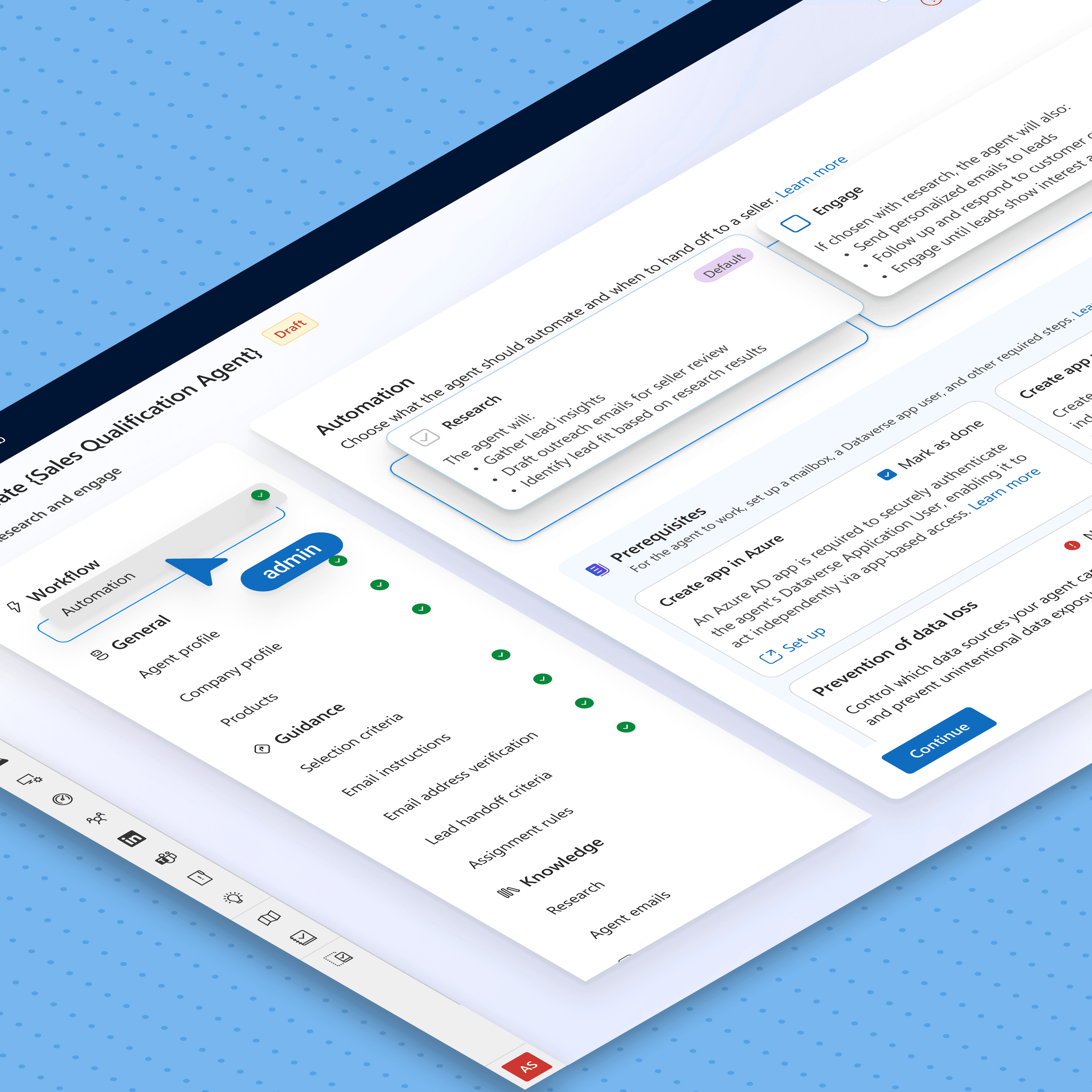
It laid conceptual groundwork that later informed the Autonomous Sales Agent direction
This work helped articulate how Copilot could evolve from a reactive assistant into a proactive, outcome-driven sales partner.
Its impact went beyond the immediate demo: